Reports Claim Hackers Used AI to Target Mexico’s Government Systems Spark Online Debate

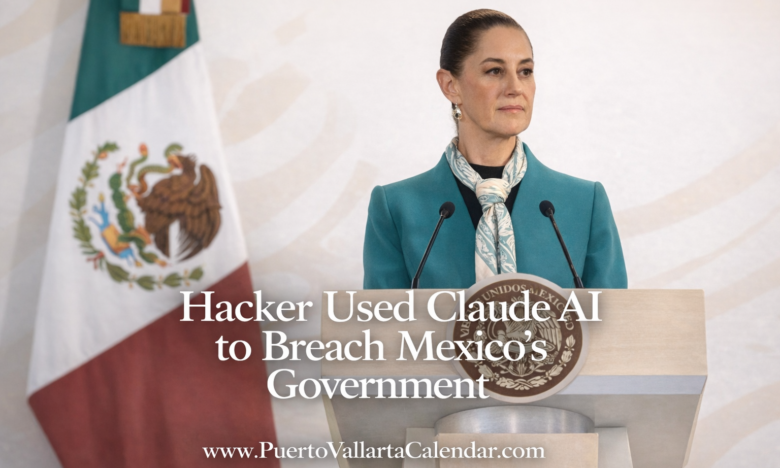

A headline making the rounds online this week claims that hackers used artificial intelligence to breach Mexico’s government systems. The story spread quickly across social media and prediction platforms, raising concerns about cybersecurity and the growing role of AI in modern digital threats.
But as the conversation spreads, cybersecurity experts say the situation is more complicated than the viral headline suggests.
The claim circulating online states that a hacker allegedly used the AI system known as Claude to assist in penetrating Mexican government infrastructure. The allegation gained traction after posts appeared on prediction markets and tech focused social platforms discussing whether advanced AI tools could be leveraged in real world cyberattacks.
While the discussion has fueled speculation, there has been no confirmed public report from Mexican federal authorities verifying that a breach of this nature occurred.
What the story does highlight, however, is a growing global concern: artificial intelligence is rapidly changing the cybersecurity landscape.
AI and the Evolution of Cyberattacks
Artificial intelligence tools such as Claude, ChatGPT, and other large language models are designed primarily for research, writing assistance, and problem solving. However, like any powerful technology, experts warn that they can potentially be misused.
In cybersecurity circles, researchers have been discussing for several years how AI could help attackers automate tasks such as generating phishing emails, analyzing vulnerabilities in software, or writing malicious code faster than before.
That does not mean the AI itself is responsible for attacks. Rather, it can sometimes be used as a tool by individuals who already have technical knowledge.
Most major AI companies place strict guardrails on their systems to prevent direct assistance with hacking or cybercrime. These safeguards are designed to block requests related to malware development, exploitation of systems, or other illegal activities.
Still, security professionals acknowledge that determined actors may attempt to bypass restrictions or use AI in indirect ways during the research phase of an attack.
Mexico Has Faced Cybersecurity Incidents Before
Mexico, like many countries, has experienced cybersecurity incidents in recent years involving both government and private institutions.
One of the most widely reported cases occurred in 2022 when a group known as Guacamaya reportedly accessed internal files from Mexico’s Secretariat of National Defense. That incident resulted in the leak of millions of documents and highlighted vulnerabilities in government digital infrastructure.
Since then, Mexican authorities have been working to strengthen cybersecurity protections across federal agencies and public institutions.
Digital threats are not unique to Mexico. Governments around the world are facing increasing pressure to defend against sophisticated cyber operations carried out by criminal groups, hacktivists, and in some cases state backed actors.
Why AI Is Becoming Part of the Conversation
The current viral claim gained traction largely because artificial intelligence has become one of the most talked about technologies of the decade.
As AI tools become more accessible, cybersecurity researchers are actively studying both defensive and offensive implications. AI can help security teams detect anomalies, identify vulnerabilities, and respond to threats faster than traditional methods.
At the same time, malicious actors may attempt to use similar technologies to accelerate their own operations.
Experts often describe the situation as an arms race between cybersecurity defenders and attackers.
In many cases, AI may actually strengthen defenses rather than weaken them. Security systems powered by machine learning are already being used to detect unusual network behavior, stop phishing campaigns, and identify suspicious login patterns.
Viral Headlines vs Verified Information
The viral image circulating online linking Claude AI to a breach of Mexico’s government illustrates how quickly tech related stories can spread before facts are confirmed.
Prediction platforms and social media often amplify speculation around emerging technologies, particularly when cybersecurity and national security are involved.
For residents and businesses in Puerto Vallarta and across Mexico, the takeaway is less about a specific claim and more about the broader shift toward digital security awareness.
Government agencies, tourism businesses, and private companies increasingly rely on online systems for operations, reservations, financial transactions, and communication. Protecting those systems is now a critical part of economic stability and public trust.
What Happens Next
At the time of publication, there has been no official confirmation from Mexican authorities that an AI assisted breach targeting federal systems occurred as described in the circulating posts.
Cybersecurity experts say investigations into digital incidents often take weeks or months before verified details become public.
In the meantime, the conversation highlights a reality that experts have been warning about for years: artificial intelligence will continue to shape both the threats and defenses of the digital world.
For Mexico and destinations like Puerto Vallarta that depend heavily on tourism, secure digital infrastructure is increasingly important for everything from airline bookings to hotel operations and financial systems.
As AI technology evolves, governments and companies alike will need to stay ahead of potential risks while also embracing the opportunities the technology provides.
The debate sparked by the viral claim may ultimately serve as a reminder that in the age of artificial intelligence, cybersecurity is no longer just an IT issue. It is a national security issue, an economic issue, and increasingly a public conversation happening in real time across the internet.
Written by The Media King – Will Walker | @WNWalker